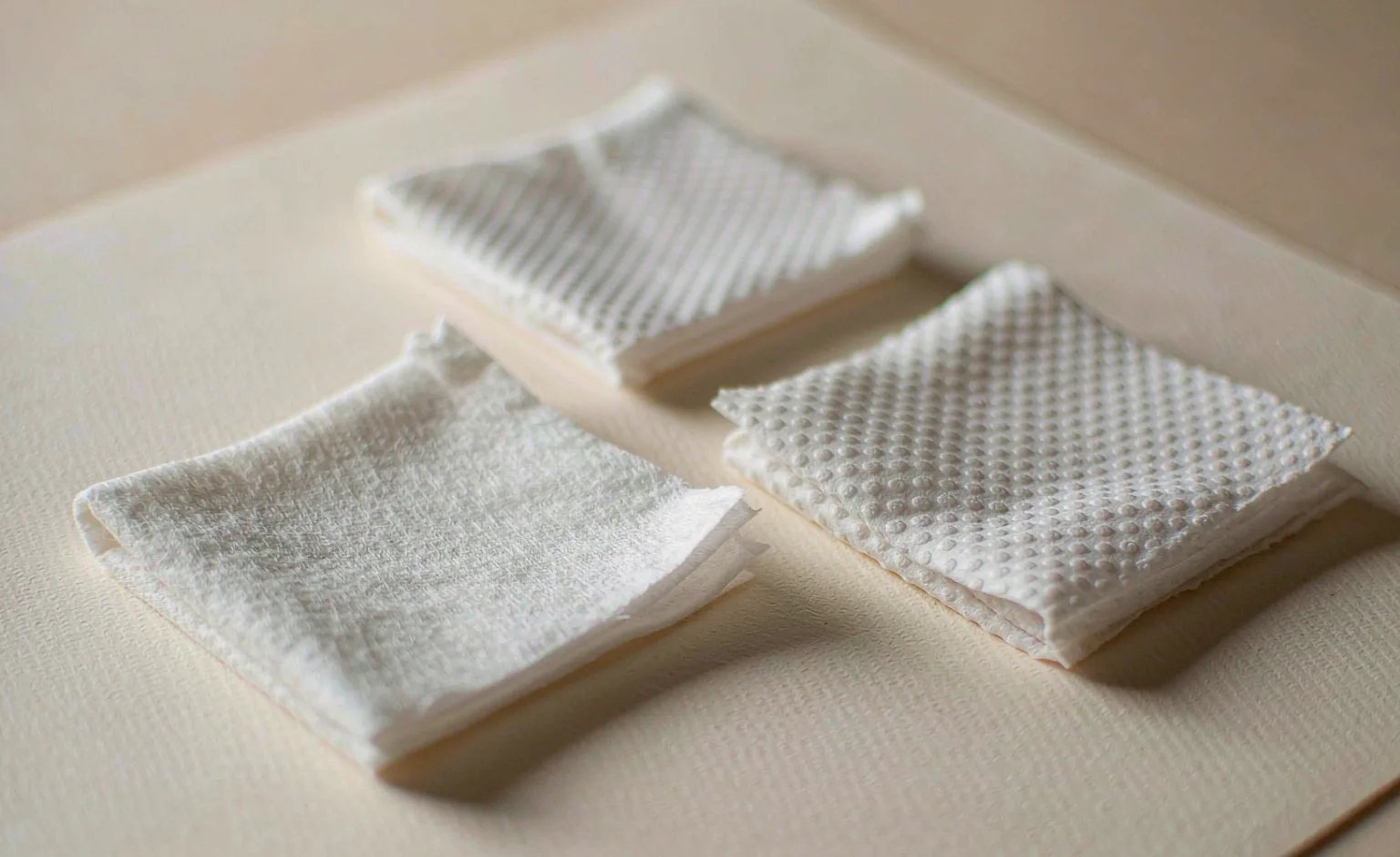
Cotton, viscose, lyocell, pulp and rayon, polyester blends, and a catch-all phrase that reads 'bio-based'. Those were the material labels we found on 121 face towel product pages. Eighty-one of them named something specific enough to record as a fiber.
Forty-four gave a full ratio. Put differently: on two out of three pages, a buyer can learn the family. On one in three, they can learn the recipe.
Where the wording helps
Renbe's UK pages are the clearest example in the panel. The product description says the towels are made from bamboo-derived viscose, which tells a buyer both the feedstock and the fiber it became. That distinction matters because 'bamboo' on its own describes a plant, not a textile. The same store sells a 30-sheet box, a 60-sheet box and an 8-sheet travel box, and the pages keep the sheet design consistent while changing the format.
Fomin does something similar in a different way. Its bamboo-labelled variant on iHerb carries a different product code from the standard version, so the two can be told apart in a purchase order. Clean Skin Club's bamboo variant, by contrast, sits in a product title without a fiber identity attached, and we recorded it as unspecified rather than assuming what the word meant.
What a name does not tell you
Viscose can come from wood pulp or from bamboo pulp, and the fiber that comes out is viscose either way. A page that says 'plant fiber' has told you the feedstock category and nothing about the process. A page that says 'cotton' has told you the family but not the grade, the staple length, or whether anything else is blended in.
For a buyer writing a specification, that gap has a cost later. If the approved sample is a 70/30 blend and the purchase order says 'viscose/polyester', the two documents do not describe the same product. Ratios belong in the specification line, next to the fiber name, not in a marketing paragraph.
What this does not say
These are seller descriptions, not laboratory compositions. We did not test any sample, and a page that names a fiber is not a page that has proved it. Nor is 81 in 121 a disclosure rate for the category; it is what a selected panel of pages displayed on the days we read them. Pages that name a fiber and pages that give a ratio are counted separately.